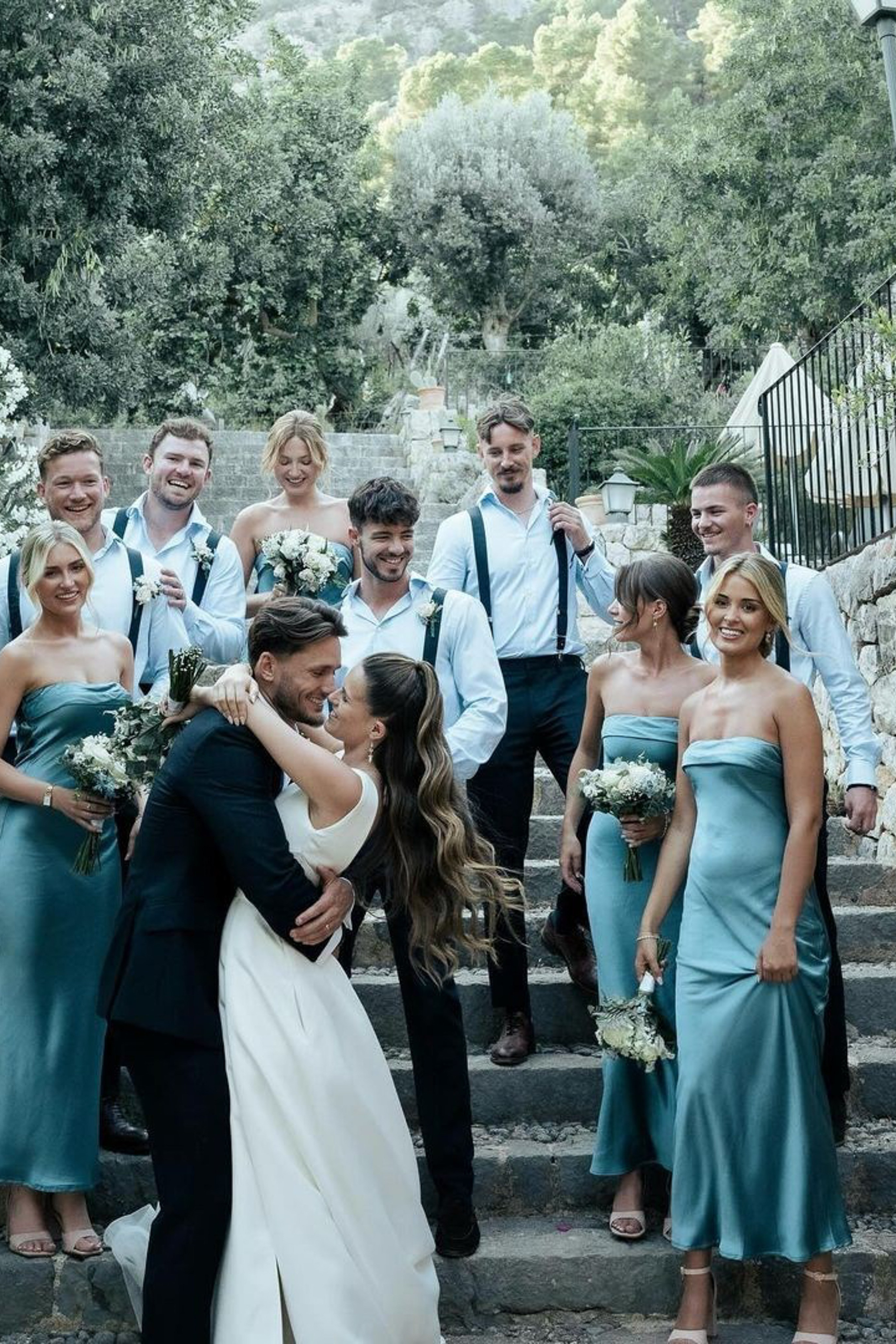
Adele & George’s Multicultural Wedding at Son Marroig
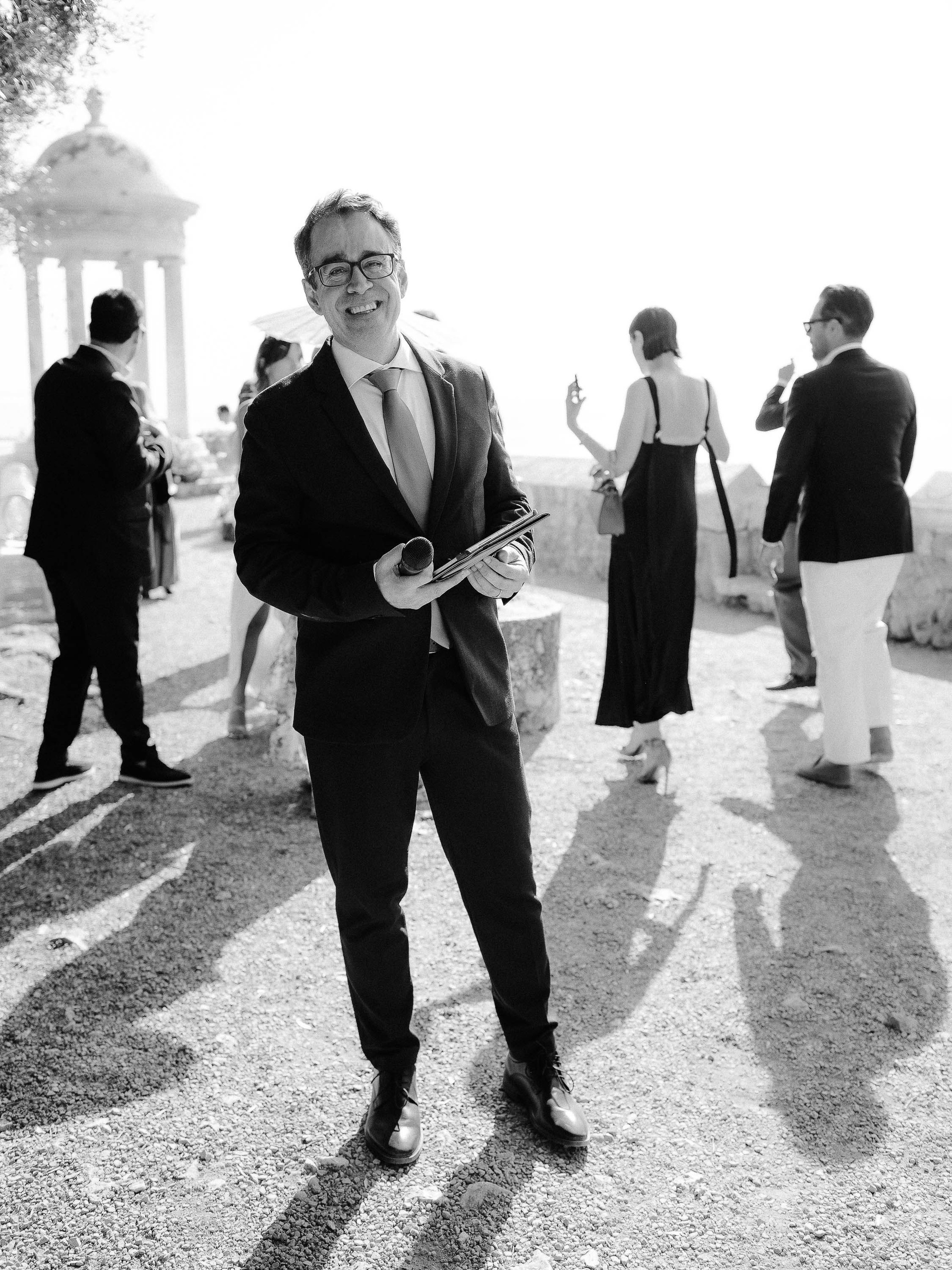
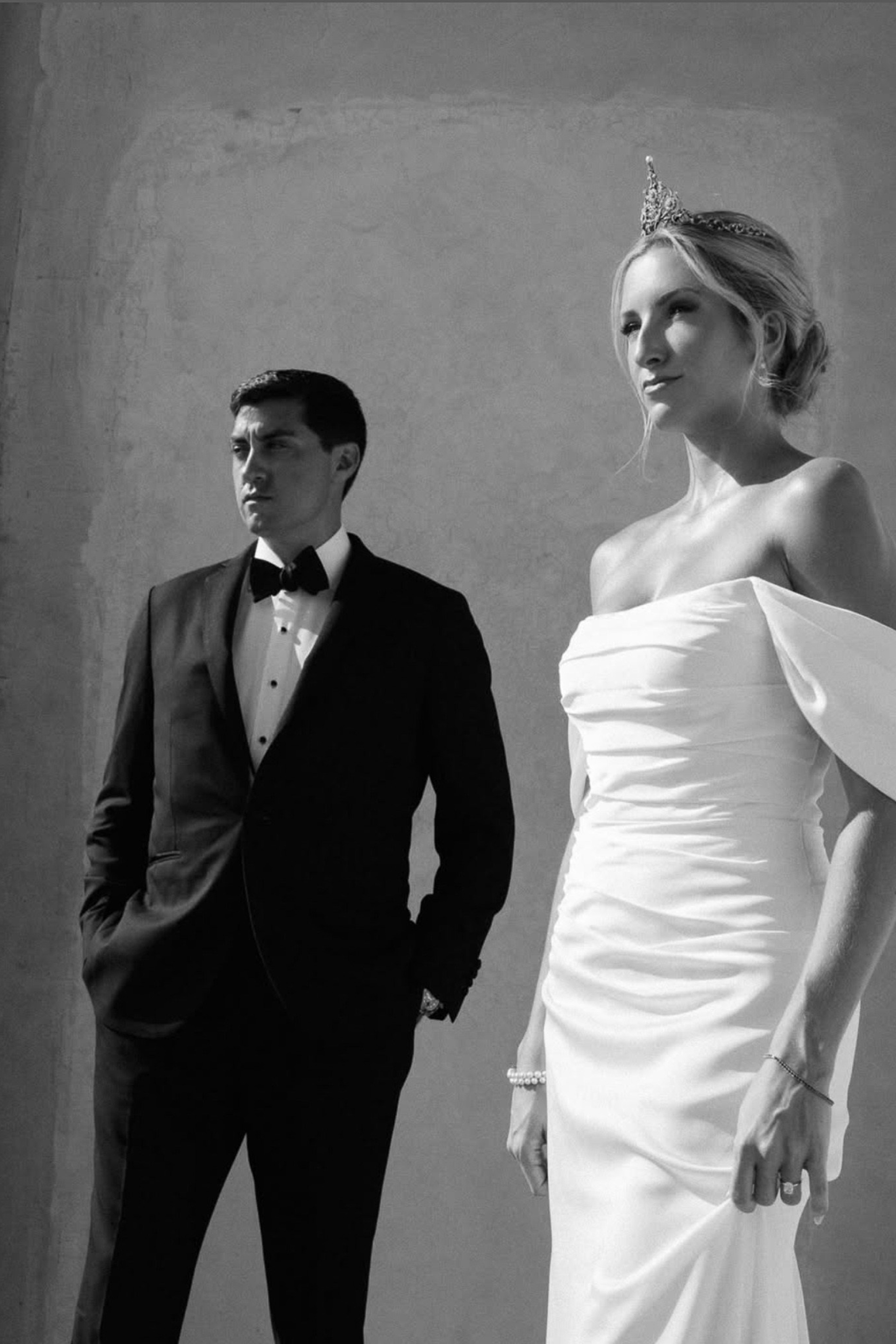
I’ve led ceremonies at most of Mallorca’s landmark venues, but Adele and George’s Son Marroig wedding is one I still think about. As a Mallorca wedding celebrant and officiant, that’s usually the job: two family histories, two sets of traditions, one afternoon to bring them together at the cliff edge. Adele is from the Czech Republic, George is from Greece, and they both live in London now. The ceremony has to feel like it belongs to both families equally.
Why Couples Choose Son Marroig for a Luxury Ceremony
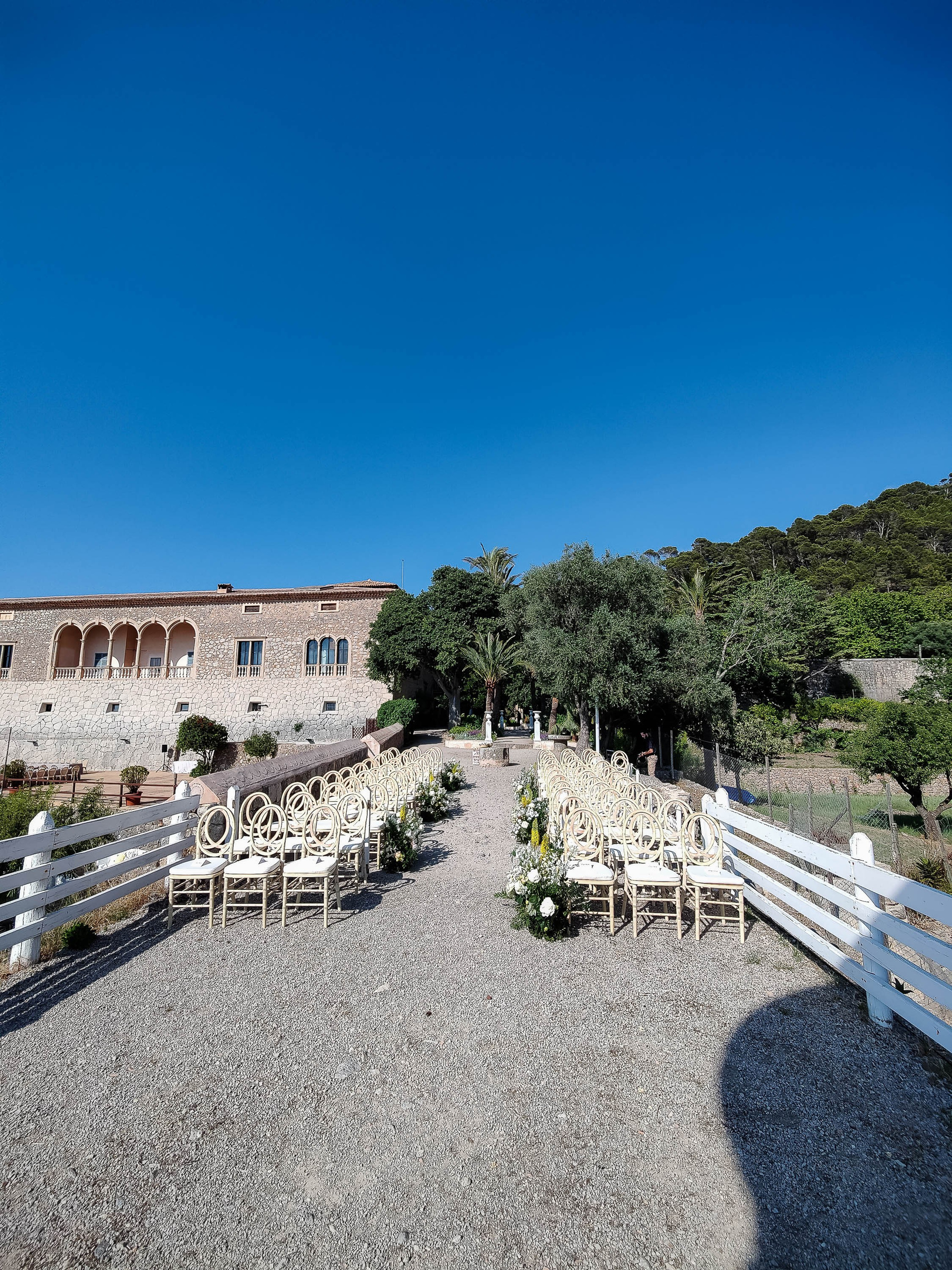
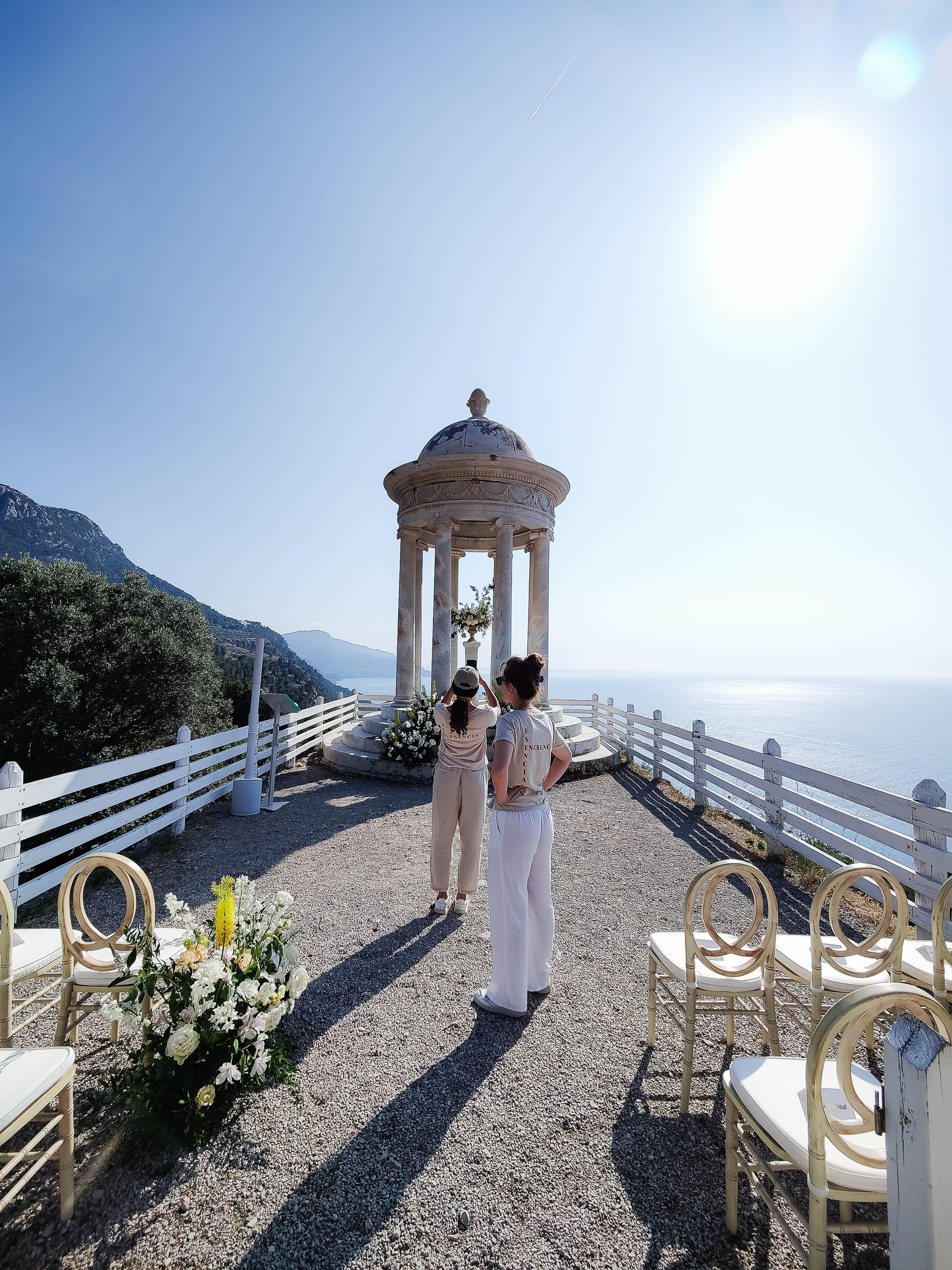
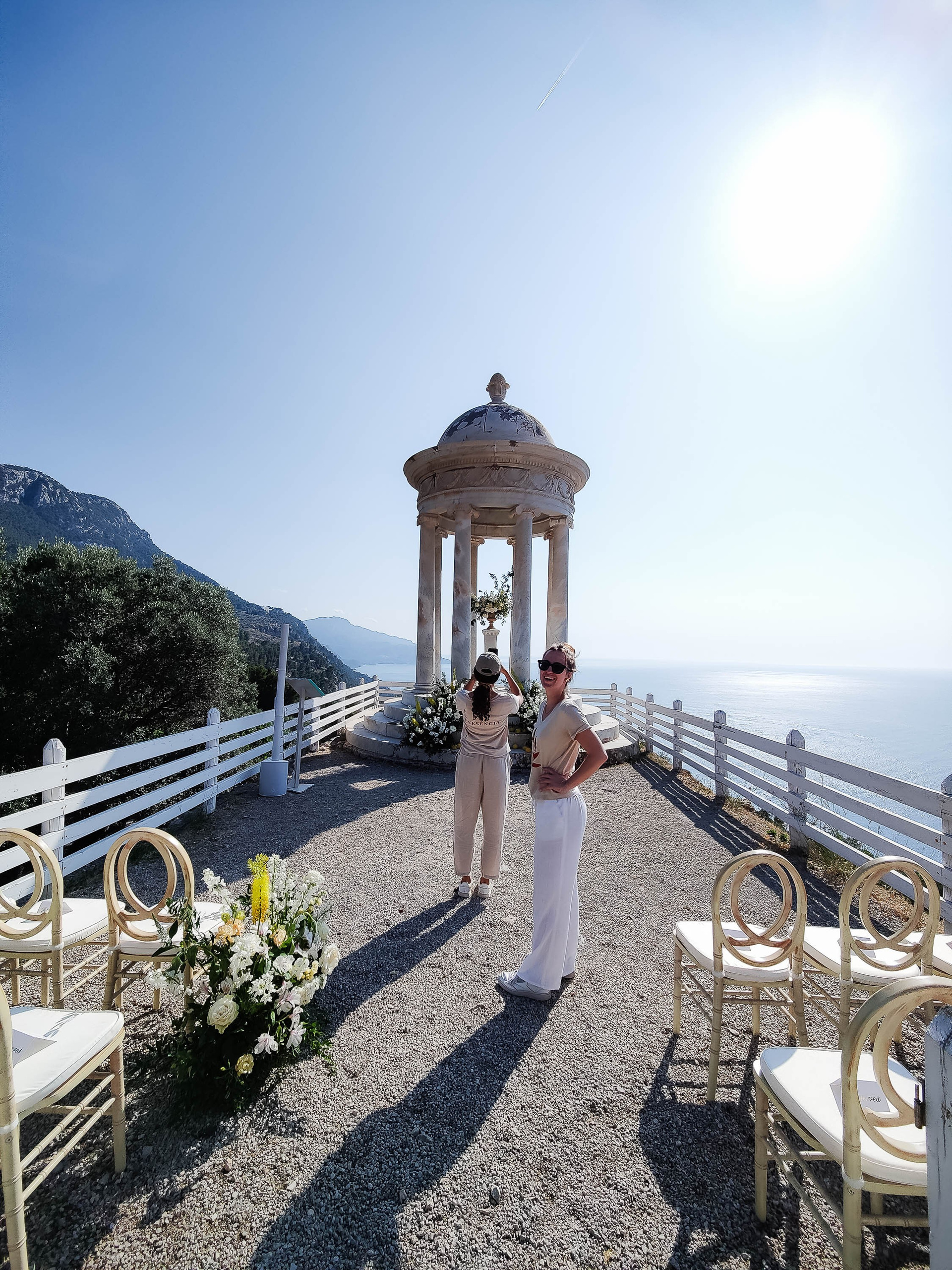
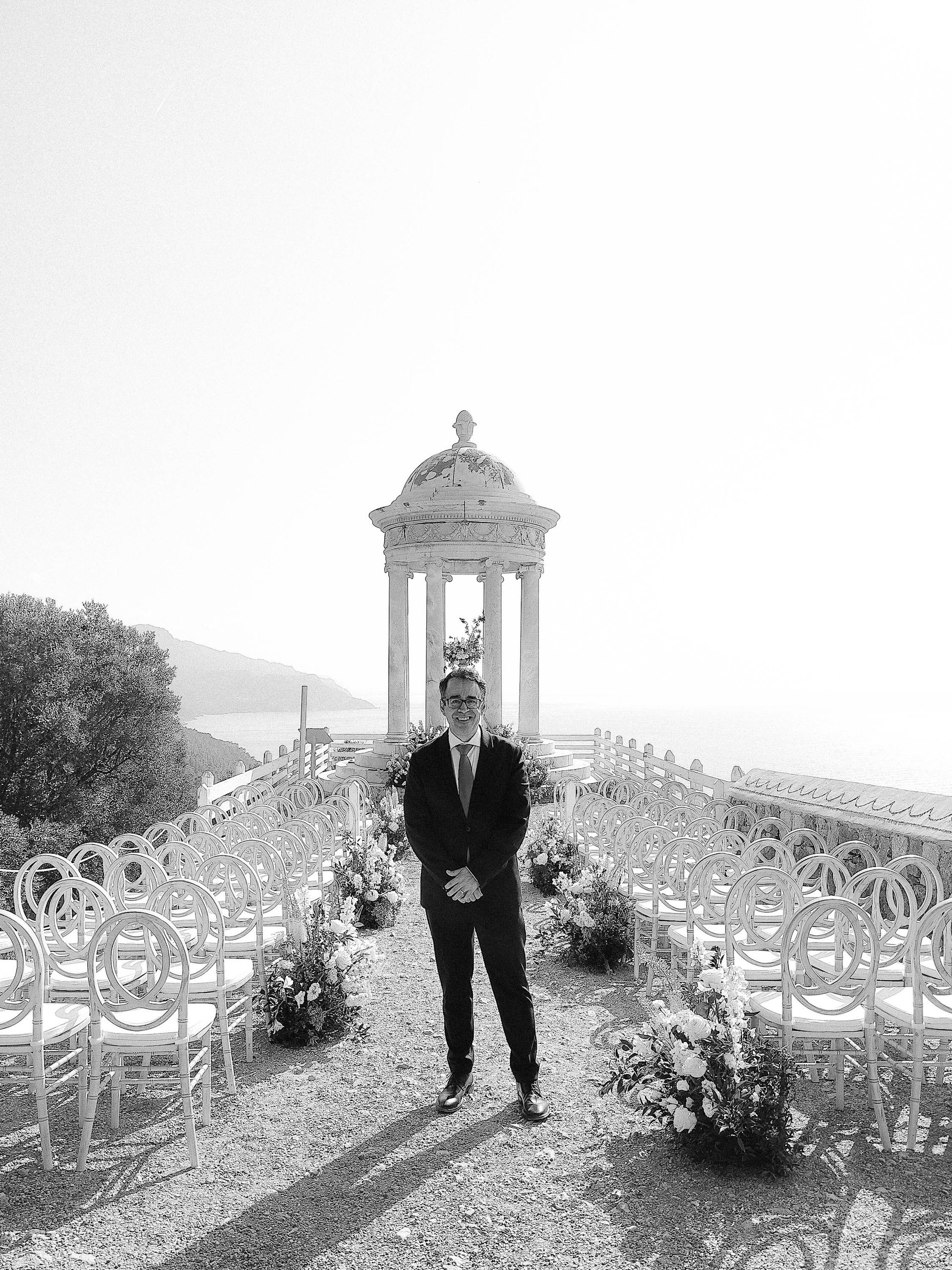
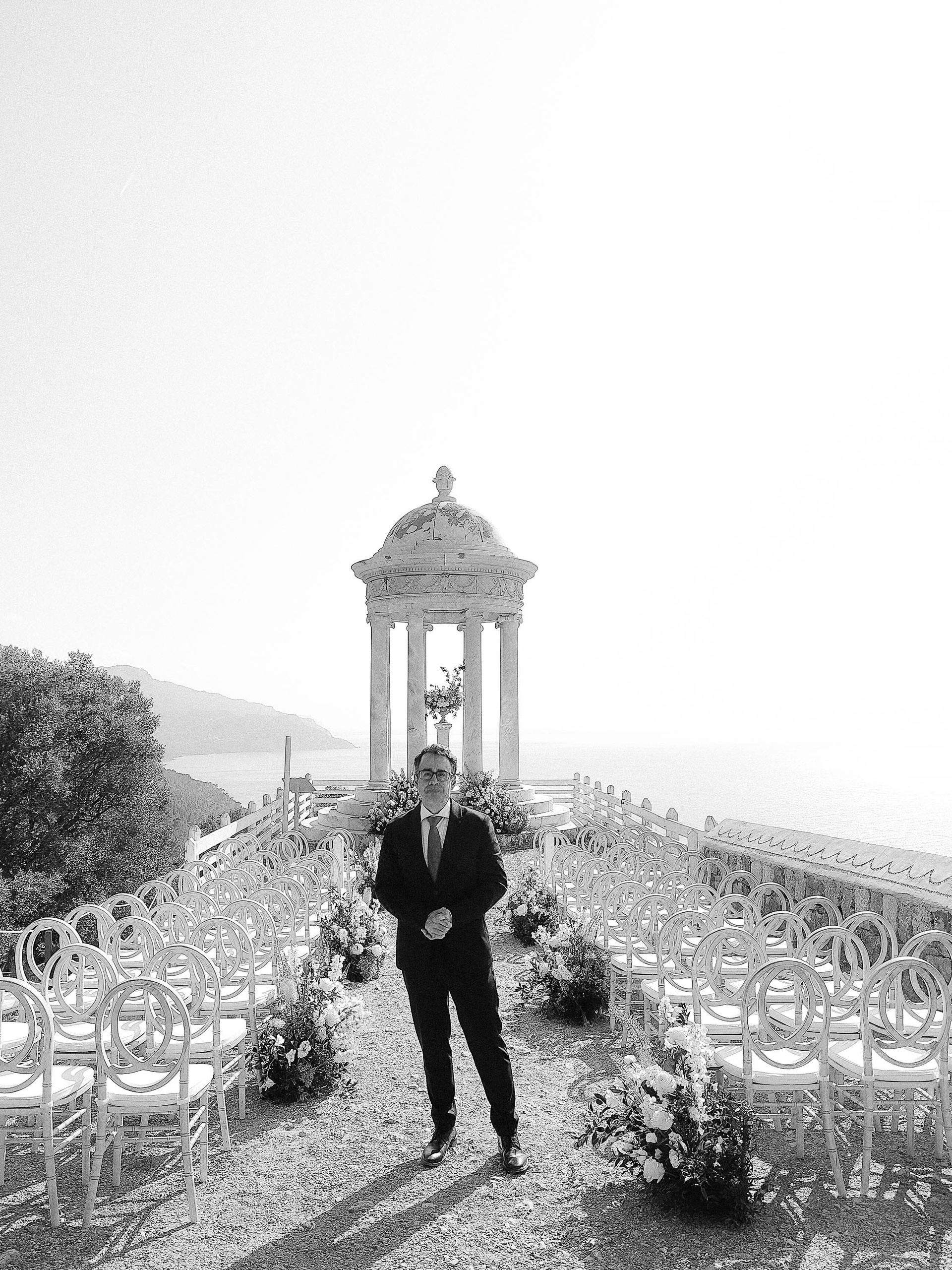
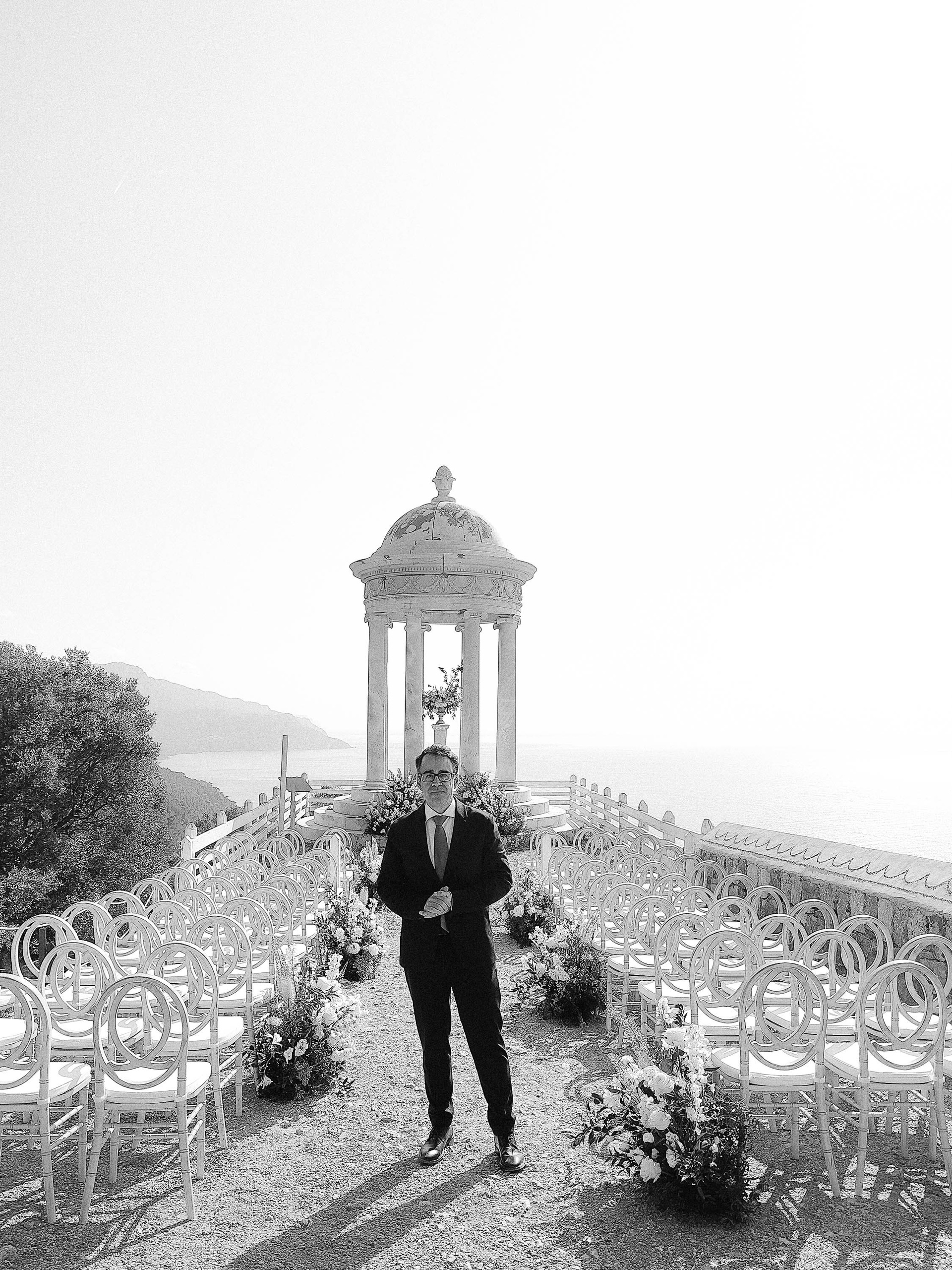
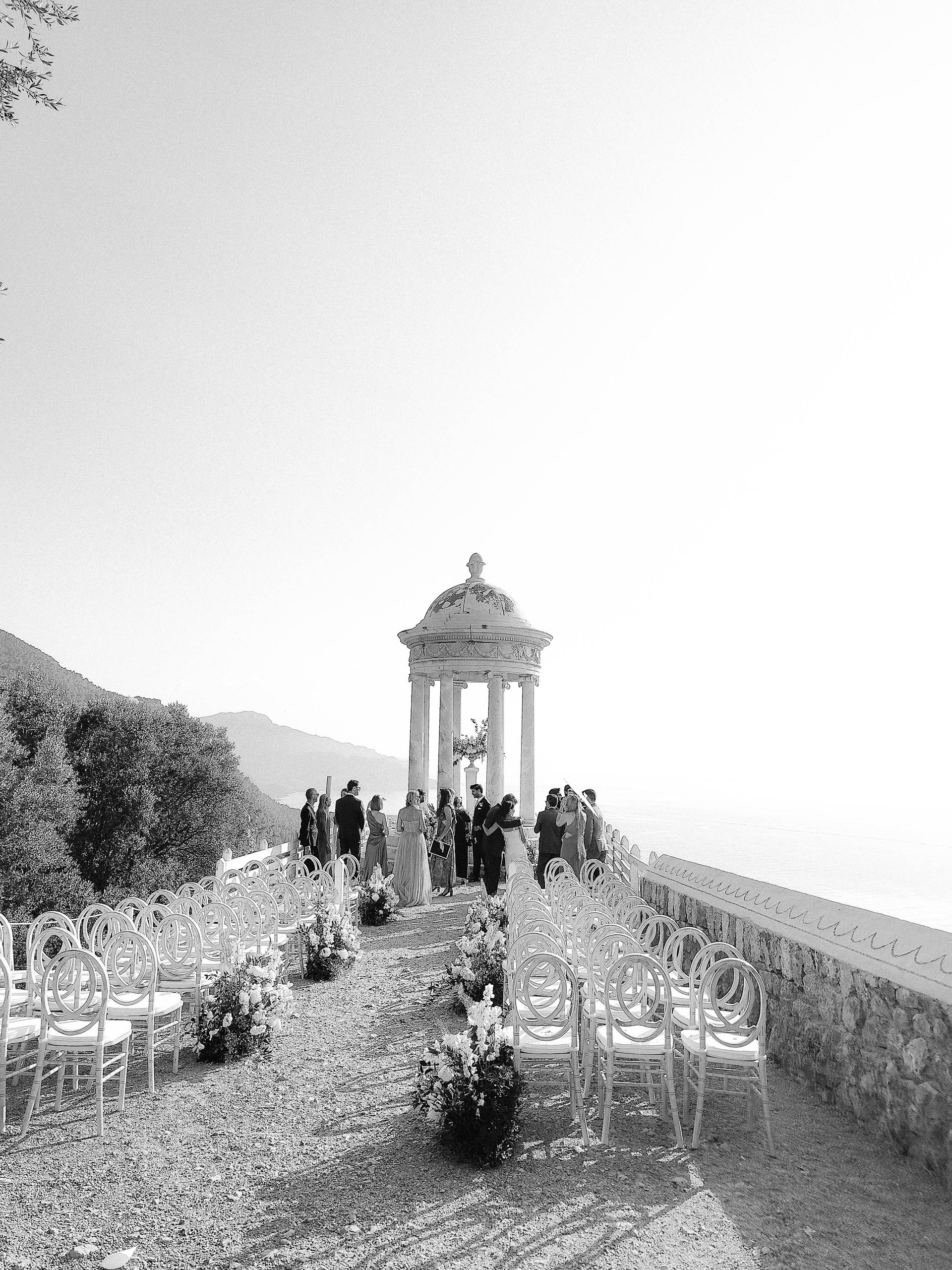
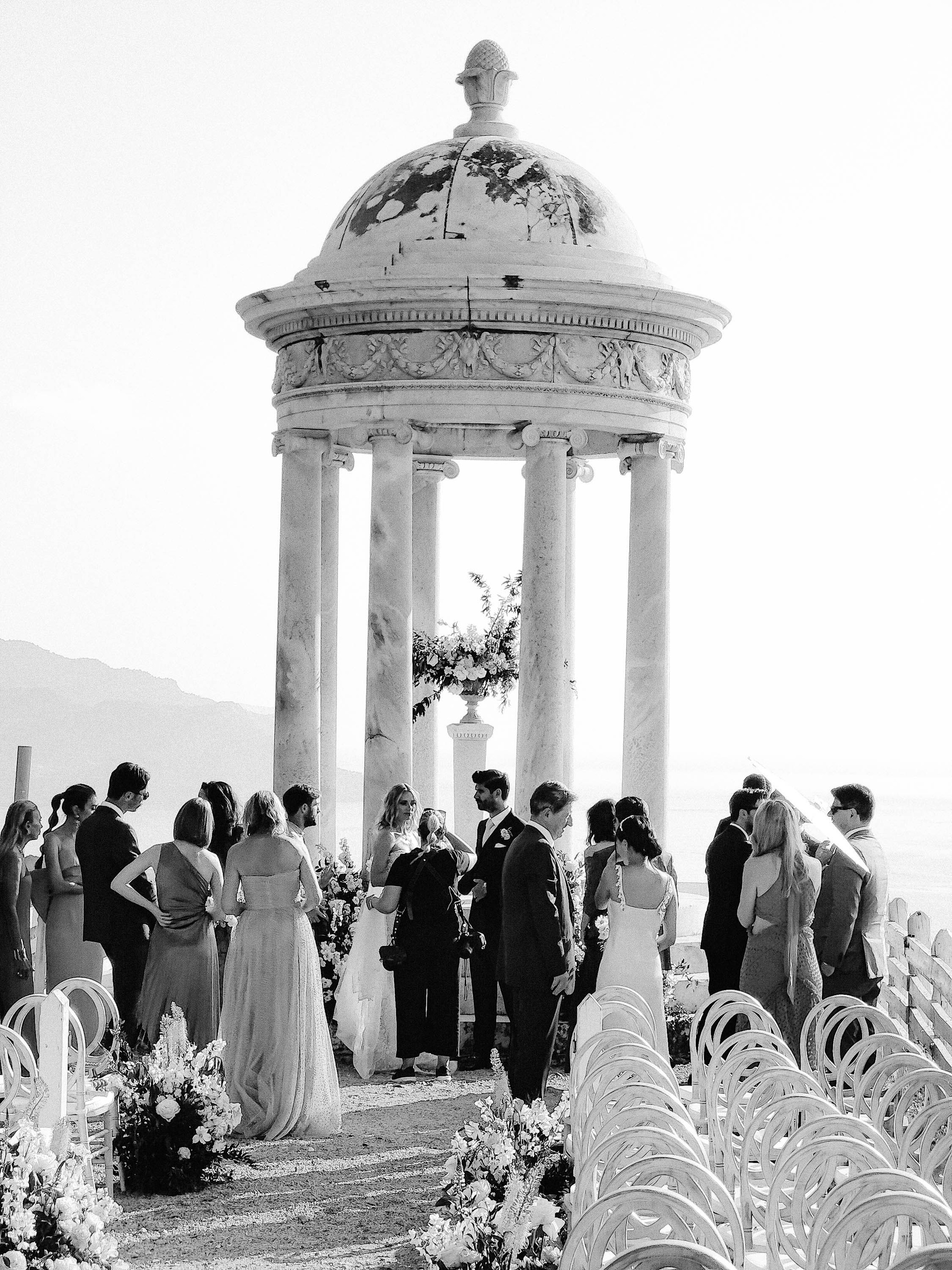
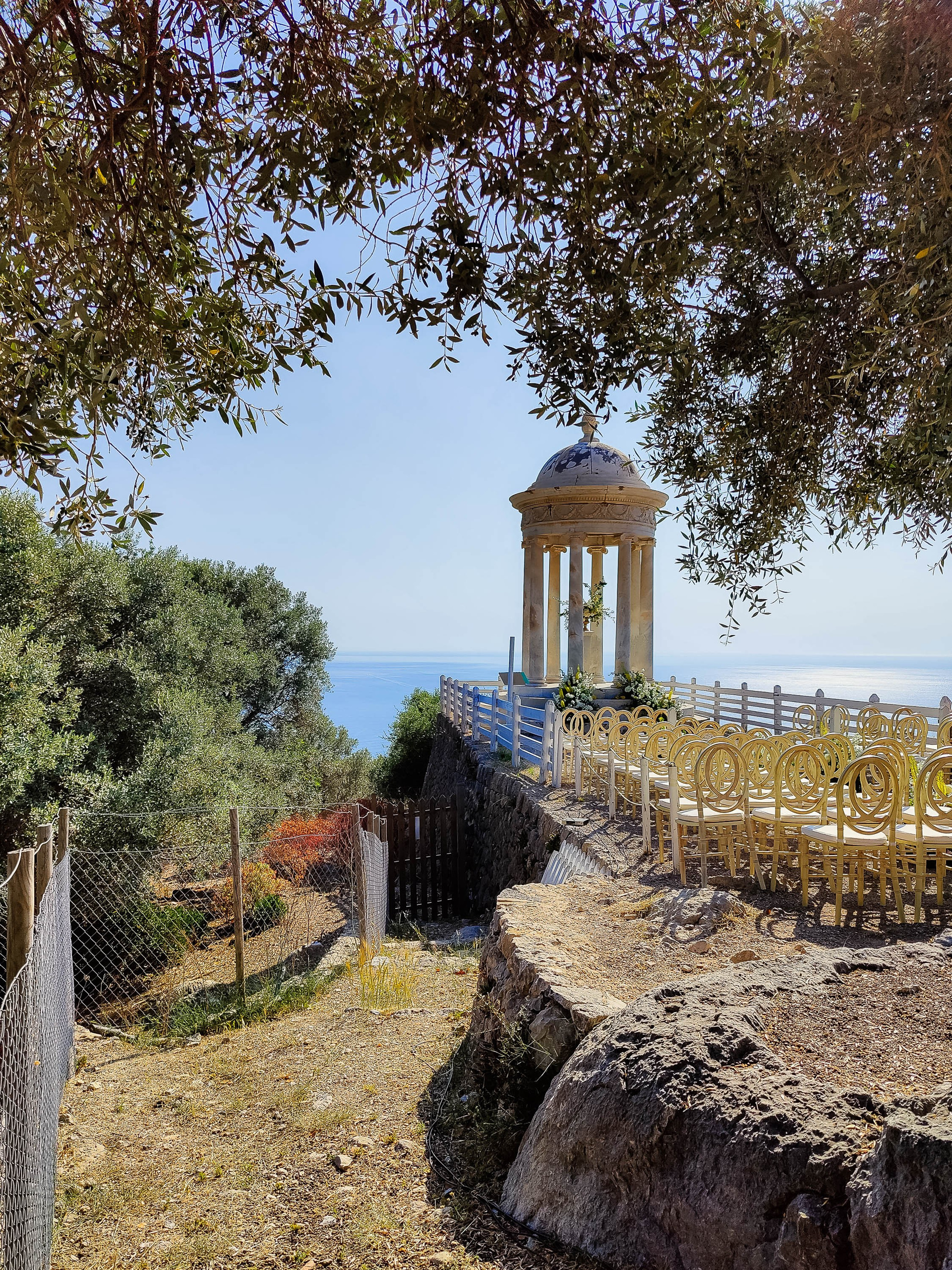
Son Marroig sits on the cliffs above Deià, part of the 16th-century estate once owned by Archduke Ludwig Salvator of Austria. Vows are exchanged at the Greek-style marble temple on the cliff edge, with the Mediterranean and the Na Foradada peninsula behind you. It holds up to 140 guests, and that combination of history, elevation, and sea view is why it’s one of the venues I get asked about most. It’s also one of the most photographed ceremony settings on the island, which matters if your day is being documented for family across three continents.
For Adele and George, timing mattered as much as the setting did. We started as the sun dropped and the light turned gold over the water. My job was to write words that could hold their own against that view, without competing with it or getting lost in it.
Weaving Two Cultures Into One Ceremony
The hardest part of this ceremony was the heritage. George’s Greek family, Adele’s Czech family, both wanting to feel seen without the ceremony turning into two traditions performed side by side. What actually worked:
- Readings chosen to reflect both family backgrounds
- Small symbolic gestures acknowledging each set of parents
- Language and pacing built around the couple’s shared life in London
Greek, Czech, and London-based British life, folded into one script instead of kept as three separate ones. That’s the part of writing a bilingual or trilingual ceremony that takes the longest to get right, and it’s the part couples tend to remember most. It’s the same principle behind a Persian-Dutch fusion ceremony at Finca Comassema and a Chinese wedding ceremony, also at Son Marroig — different heritages each time, same approach to building one ceremony rather than several side by side.
The Ceremony Itself
The vows were the moment everyone talked about afterward. Close family and friends, the sea behind us, and that particular quiet that settles over a group when the words actually land. A wedding day passes fast. A ceremony the couple can still recite lines from years later does not.
After the Ceremony
Cocktails on the terrace, then dinner and dancing with the Mediterranean still visible behind the tables as the sky went dark. It’s why so many couples pick Mallorca over other destinations. The setting doesn’t stop working once the vows are done.
Planning a Son Marroig Wedding Celebrant or Officiant Booking
Son Marroig books out well over a year ahead for peak season, May to September. If you’re planning a multicultural or bilingual ceremony there, get in touch early. The more time there is, the more properly family history, language, and ritual can be worked into the script instead of squeezed in at the last minute.
I officiate directly in English, Spanish, German, and French — including ceremonies written entirely in French for francophone couples — working as both wedding celebrant and officiant depending on which term your venue or planner uses. For other languages and traditions, Greek, Iranian, Dutch, and others, I’ve built these in through translated readings and structured vow elements, even on ceremonies I wasn’t delivering in that language myself. The same approach shaped a Spanish-American ceremony blending Texas and Spain, where family heritage carried similar weight.
See more real weddings at Son Marroig →
Get in Touch
If you’re planning a luxury ceremony in Mallorca and want a celebrant who takes the time to understand your background before writing a word, get in touch to check availability.
Email: ibancollin@gmail.com
The Wedding Crew
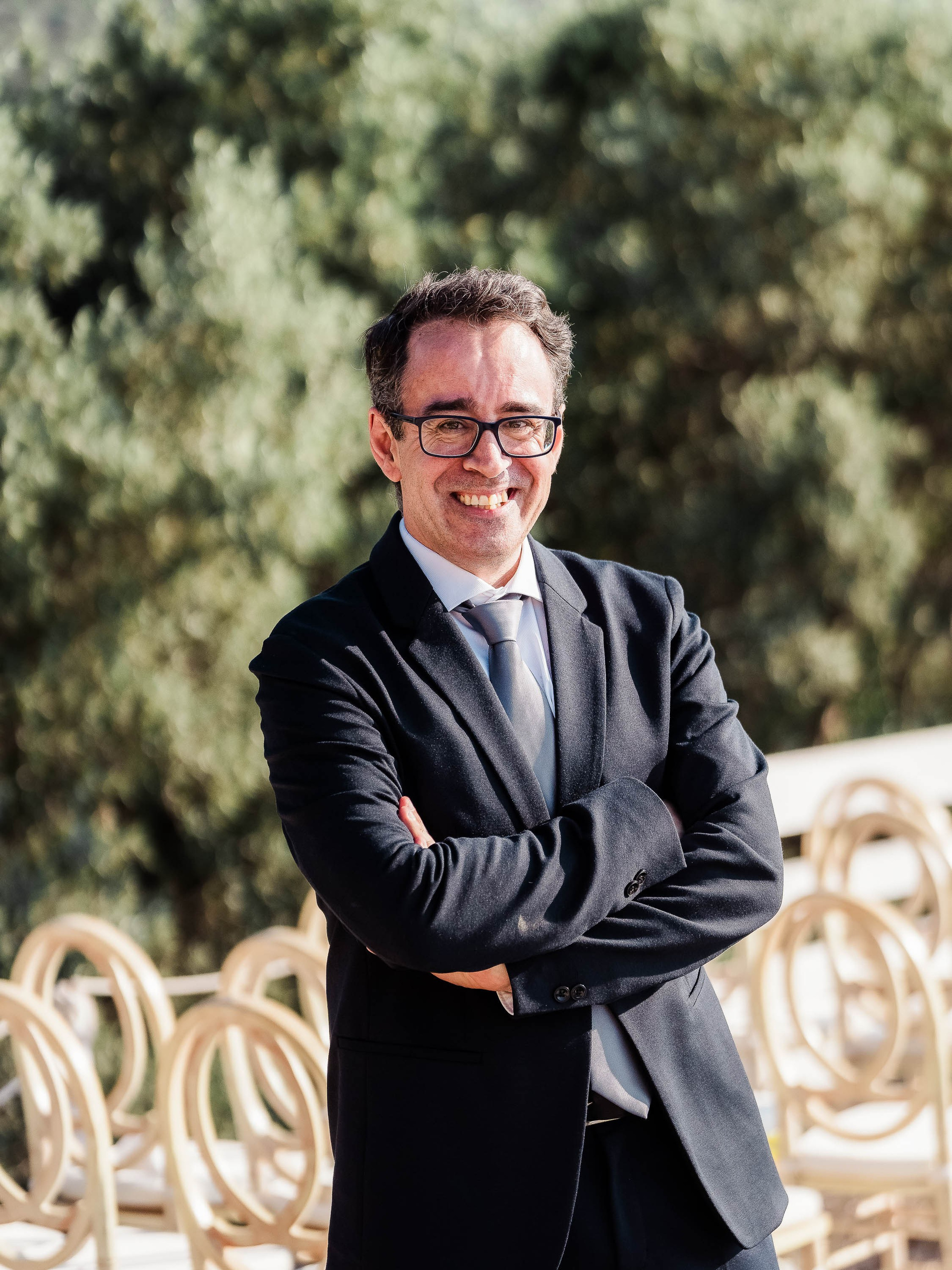
- Ceremony Designer: Iban Collin
- Wedding Planner: Bimai Events
- Photographer: Miguel Arranz
- Venue: Son Marroig
FAQ
Can a Mallorca wedding celebrant build a ceremony around two different cultural backgrounds? Yes, multicultural ceremonies are among the most rewarding work a celebrant does. Getting in touch early gives enough time to talk through family and cultural specifics that should shape the ceremony, rather than adding them as an afterthought.
Is a wedding celebrant the same as a wedding officiant in Mallorca? Yes. “Celebrant” and “officiant” describe the same role and are used interchangeably here, though the terms are more common in different countries. Ceremonies performed are legally symbolic, meaning the legal paperwork is handled separately (usually before travel), and the ceremony itself is the one guests and family actually attend.
Do you officiate in Greek, Czech, or other languages beyond English, Spanish, German, and French? Ceremonies are officiated directly in English, Spanish, German, and French. For other languages, translated readings, vow structures, and scripted elements can be built in so the ceremony still reflects both families fully.
How much does a luxury wedding celebrant in Mallorca cost? Pricing depends on the ceremony format and how much personalization is involved. Get in touch directly for current rates for a Son Marroig ceremony or another Mallorca venue.
How far in advance should we book a luxury ceremony at Son Marroig? Popular dates at Son Marroig fill up more than a year out for peak season (May to September). Reaching out early, even before the date is finalized, keeps options open.
What makes Son Marroig suited to a luxury, multicultural wedding ceremony? Son Marroig is a historic 16th-century country estate on Mallorca’s northwest coast near Deià. Originally a traditional fortified farmhouse, it was transformed in the late 19th century when Austrian Archduke Ludwig Salvator purchased it. He made the estate famous by preserving the surrounding coastline and adding its iconic Carrara marble pavilion.
The marble ceremony temple, and the cliffside Mediterranean setting give the ceremony a strong visual and historical backdrop, while the 140-guest capacity keeps it intimate enough for a personalized, story-driven script rather than a large-scale production.